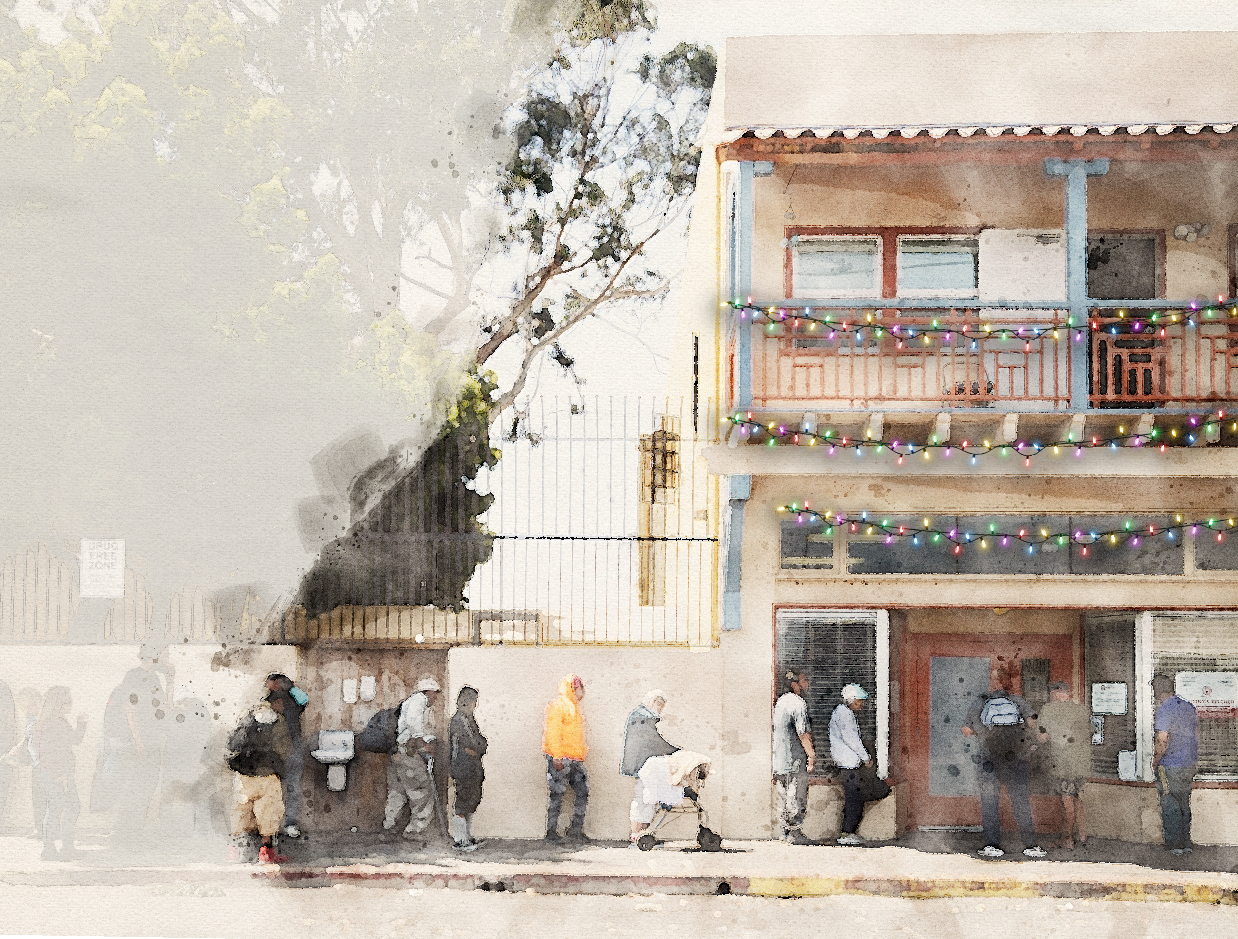
The chaos of homelessness reigned all around her in Salinas’ Chinatown. Yelling, swearing, and fighting. Cars stopped 15 feet away, exchanging drugs for money. Yet Elanor was in her own small world, folding laundry.
Obviously exhausted, Elanor slowly told me she had met her partner Ed more than 40 years ago in Chinatown. They had both been using heroin since they were 13. She suffered a traumatic brain injury when she was a child that affected her memory and ability to work and to earn.
Elanor did sex work and sold drugs. It was all she knew to do. Ed made money doing odd jobs and selling drugs.
And then, with tears streaming down her face, she told me, “Now Ed needs a doctor, and I’m too old to do this anymore. I just don’t know what to do.”
Elanor would be lost without Ed. She’s also scared, so scared, and feeling alone.
Tent living makes Elanor and women like her terribly vulnerable to rape and other physical and mental assaults. She will also lose her valuables – money, ID cards, prescription medications, disability documents, photos of loved ones, even her tent – if she leaves it for any length of time.
Her transformation includes a social worker and housing specialist trained in gentle care that will build a trusting relationship without traumatizing her again. This support can extend for as long as she needs it, even after she is in her permanent home.